Key points
- President Tinubu has nominated former military chief Christopher Musa as the new defense minister
- Musa was sacked as chief of defense staff in October
- He will replace Mohammed Badaru Abubakar, who resigned as defense minister on Monday
- The leadership shakeup comes as Nigeria faces a fresh wave of mass kidnappings
Nigeria’s President Bola Tinubu has nominated the country’s former top general, who he forced out in October, as the new minister of defense.
Christopher Musa will need to be confirmed by the senate to assume the post.
Tinubu has written to the senate expressing “confidence in General Musa’s ability to lead the Ministry of Defense and further strengthen Nigeria’s security architecture,” a spokesperson said on Tuesday.
Why did the previous defense minister Badaru step down?
Musa will succeed Mohammed Badaru Abubakar, who resigned as defense minister on Monday citing health reasons.
Before his sudden resignation, Badaru had been strongly criticized for the government’s failure to tackle a surge in mass kidnappings and Islamist attacks in the West African country.
The calls for Badaru’s exit became stronger after he said during a recent interview with BBC’s Hausa service that some terrorists couldn’t be attacked because their forest hideouts were too dense for bombs to reach.
What do we know about General Christopher Musa?
Musa led the military, serving as chief of defense staff, from 2023 until late October 2025, when Tinubu sacked Musa along with a number of the country’s top military officials.
At the time, the media reported that there was a coup attempt, although Tinubu’s government denied these reports.
There was no immediate explanation for why Musa was returning.
A career soldier, Musa joined the military in 1991 after studying at the country’s defense academy, according to the presidential statement.
The 58-year old has field experience combating terrorism. He led operations against the Boko Haram Islamist group from 2021 to 2022 in northeastern Nigeria. Before that, he was a sector commander in the Multinational Joint Task Force fighting Boko Haram and other terrorism groups in the Lake Chad region.
Nigeria hit with a new wave of abductions
Nigeria has struggled to contain mass abductions for more than a decade.
But the past months have seen a sharp uptick in armed criminal “bandit” gangs abducting people for ransom. The bandits often target schools and places of worship because of their vulnerability.
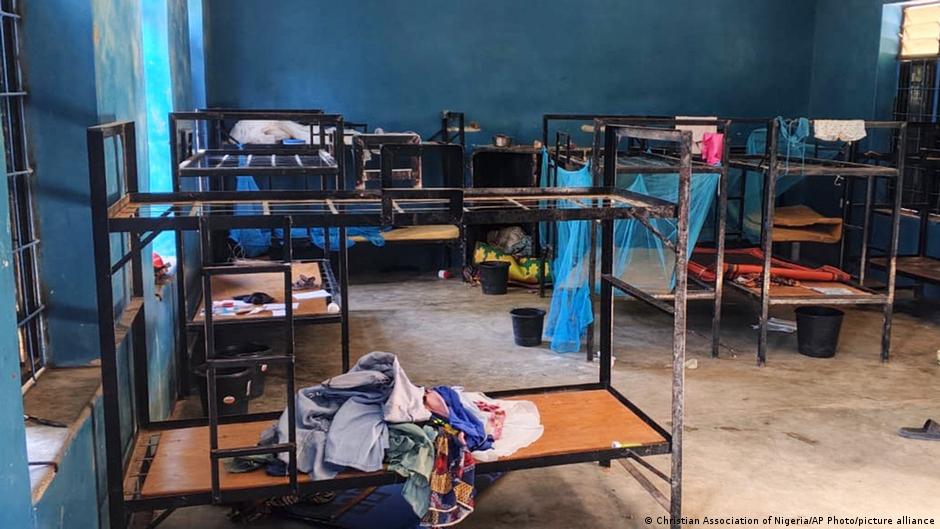
In the largest recent attack, armed men seized 315 children and staff at St. Mary’s boarding school in north-central Nigeria in late November.
Fifty escaped the attack, but the rest, mostly children, remain in the hands of the bandits.
The past two weeks have seen at least 490 people abducted across multiple states, according to Nigeria’s Punch newspaper.
As well as the schoolchildren and teachers, those kidnapped also includes church worshipers and priests, a bride and her bridesmaids and farmers.
How bad is Nigeria’s security emergency?
Nigeria faces multiple security threats. It has a long-running extremist insurgency in the north, where Boko Haram and other Islamist splinter groups carry out mass atrocities. In the country’s north-central region, farmers and hearders regularly clash over dwindling land and water resources.
On top of this, the northwest and north-central regions are seeing escalating violence by bandit gangs, including the rape of women and girls, kidnap-for-ransom and cattle rustling.
At least 11 states, including Kebbi, Katsina, Plataeau and Yobe states, have partially or completely closed their schools because of security concerns, while the federal government also closed 47 of its “Unity” schools in the north.
According to Nigeria’s National Human Rights Commission, at least 2,266 people were killed by bandits or insurgents during the first half of 2025 alone.
The worsening armed violence led President Tinubu to declare a nationwide security emergency last week.
He also ordered the recruitment of 50,000 police officers and more army enlistment.
US also pressuring Nigeria over protection of Christians
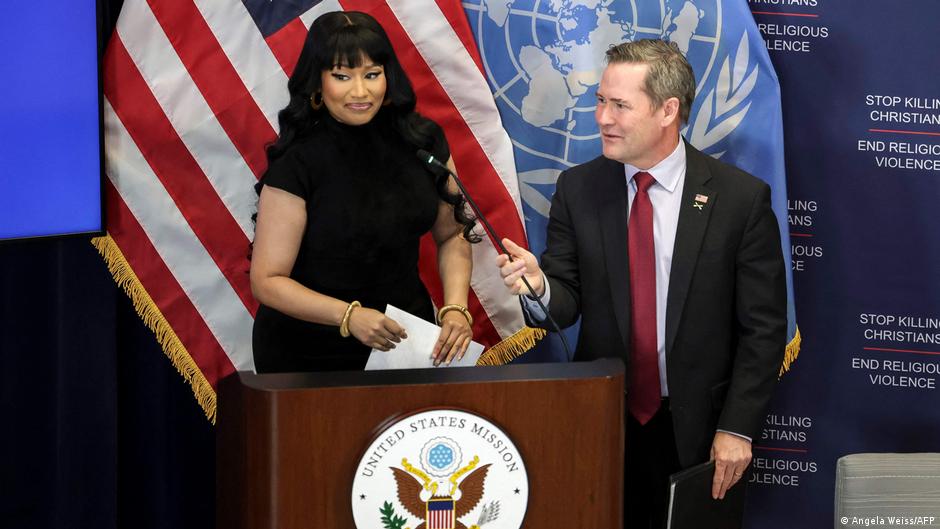
Separately, Nigeria faces pressure from the administration of US President Donald Trump, who has claimed that Christians are being persecuted in the country.
Last month Trump even threatened military action and sanctions over Nigeria’s treatment of Christians.
The Nigerian government and independent security analysts have repeatedly rebuked Trump’s claims, adding that the country’s conflicts affect victims across religious lines.
Edited by: Zac Crellin