Amidst harsh political debates on immigration, it’s easy to lose sight of Germany’s successes in welcoming and integrating immigrants and foreign students. A number of recent studies highlight the country’s recent efforts, and their benefits.
News about Germany’s immigration policies can sometimes feel like a never-ending series of bad headlines. At the beginning of this year, the conservative Union parties managed to win the federal election (followed by the anti-immigration Alternative for Germany) on a campaign that was marked by particularly harsh rhetoric on the topic of immigration, and calls for tightening borders and restricting the country’s dual citizenship rules.
Since then we have seen the federal government take steps toward those goals, repealing the fast-track to German citizenship for well-integrated individuals, ending family reunification for refugees and moving to increase deportations and rejections of asylum-seekers at Germany’s borders.
Meanwhile the country’s shortage of skilled-workers has intensified across industries, and we’ve heard from readers who expressed dismay that anti-immigration rhetoric is creating a toxic environment for immigrants of all types who have come to call Germany home.
But underneath the political noise, Germany remains an attractive destination for foreign skilled workers, students and asylum-seekers alike. And researchers are constantly uncovering evidence that suggests the country is steadily getting better at integrating these groups, and that its efforts to do so have had a multitude of positive impacts.
Rounded up by the European Commission’s Directorate-General for Migration and Home Affairs in a recent report, here are six studies from 2025 that show how Germany is progressing on immigration and integration in recent years.
Foreigners behind significant number of German patents
A study by the German Economic Institute (IW) released in October highlighted a major shift in Germany’s patent landscape: namely that the share of patents filed by foreigners has increased significantly.
In 2000, just 4.9 percent of patent applications came from people with a migration background, whereas in 2022, this share had risen to 14 percent — in other words roughly one in seven patents now originates from an inventor with a migration background.
The most significant increase comes from creators with Indian roots, whose share grew from 0.1 percent to 1.2 percent. Strong growth was also evident among applicants from China, Southern Europe, Latin America, and Arabic- and Turkish-speaking countries, as well as among women inventors.
READ ALSO: Immigrants and women behind growing number of patents in Germany
Patent applications are considered a key indicator of a country’s innovative capacity, so the results show that Germany’s foreign population is playing an increasingly important role in maintaining the country’s economic competitiveness.
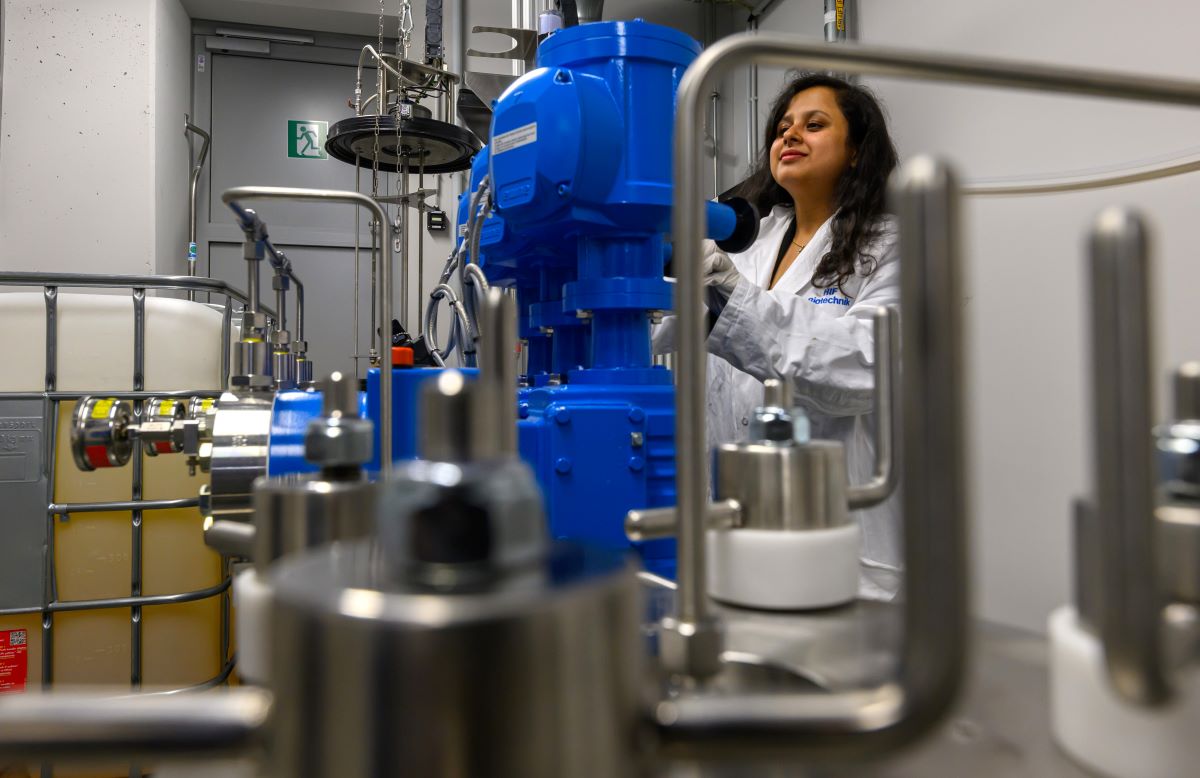
Aratrika Ghosh at work at a pilot plant for gallium recovery at the Helmholtz Institute for Resource Technology and the semiconductor manufacturer Freiberger Compound Materials in Freiberg. Photo: picture alliance/dpa | Hendrik Schmidt
The rise in patents filed by people with migration backgrounds appears to reflect broader migration trends, but also can be seen as underscoring the impact of targeted national programmes, such as ‘Make it in Germany’ and policies aiming to attract young STEM specialists from non-EU countries.
DAAD study shows remarkable potential among Germany’s foreign students
In July the German Academic Exchange Service (DAAD), which is the world’s largest funding organisation for the exchange of international students and researchers, published a new skilled labour study that highlighted the untapped potential of international students in Germany.
Surveying 21,000 students at 132 universities, the study found that two-thirds of Germany’s international students want to remain in the country after graduation, and half of those are considering starting a business.
The study also looked at why international students choose Germany, with the primary reasons being: affordable study costs, English-language programmes and good career prospects.
Master’s students, in particular, value the availability of English programmes, while also expressing interest in building long-term careers in Germany.
As part of moves toward unlocking more of this potential, DAAD’s “Campus Initiative International Experts” plans to invest €120 million to expand career, language and training support across more than 100 universities in Germany.
READ ALSO: What international students should know about scholarships in Germany
Majority of international students are becoming well integrated
Another DAAD study, this one published in August, found strong evidence that Germany’s international student population is becoming well-integrated in society and reiterated that the majority would like to stay in the country after graduating.
The benchmark international Hochschule survey included more than 120,000 students from 132 universities across Germany in the 2023/24 term, and offered a detailed snapshot of international student life.
Many of these students reported feeling well integrated – especially those with strong German language skills and those who have been in the country for a longer period.
Approximately 80 percent of survey participants said they felt comfortable at their university, and just as many said they were considering staying in Germany after graduation.
DAAD President Joybrato Mukherjee suggested these findings showed there is “a major opportunity to attract much-needed talent from around the world and keep them here long term”.
READ ALSO: Germany welcomes more and more international students
The survey also offered a snapshot of where Germany’s international students come from. The mix was markedly diverse with 37 percent coming from Europe and Central Asia, 33 percent coming from Asia and the Pacific, and 17 percent coming from North Africa and the Middle East. The largest single group was students with Indian citizenship (16 percent), with smaller but still significant numbers from Turkey, China, Pakistan, Iran, and Russia.
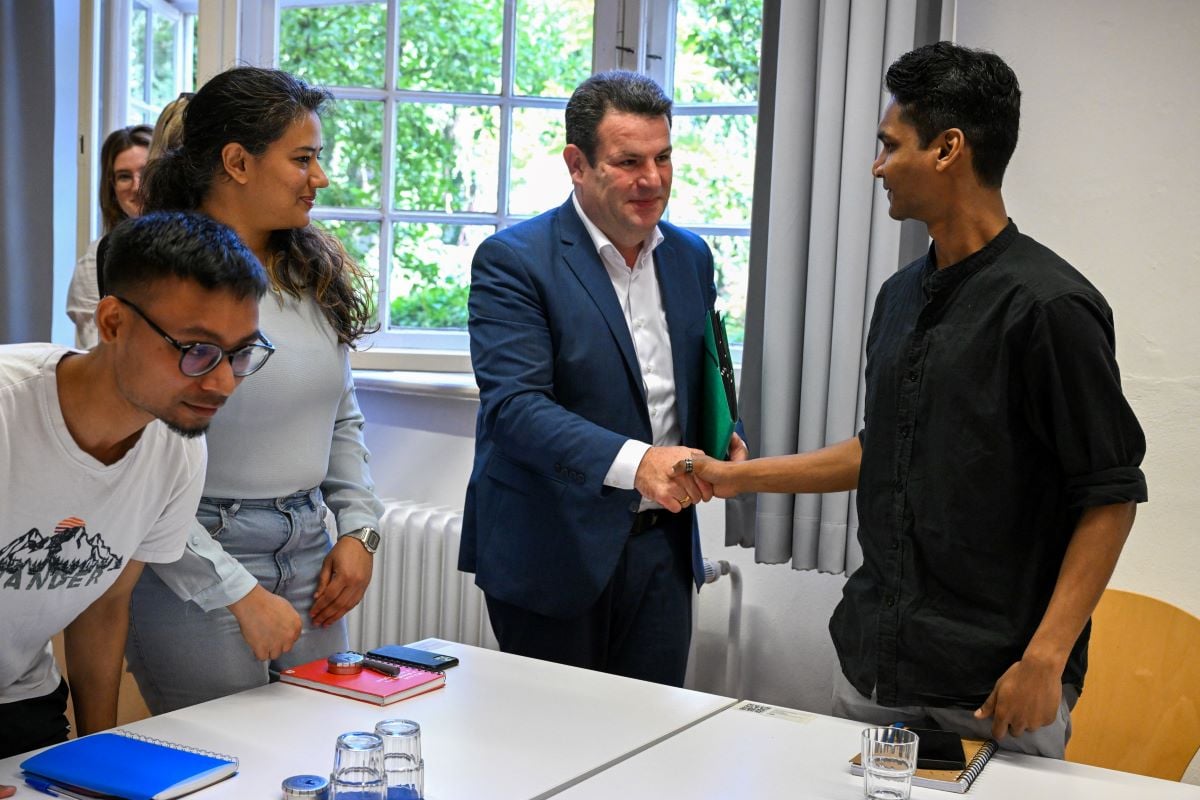
Hubertus Heil, former Federal Minister of Labour and Social Affairs, welcomes Indian students of natural sciences and economics at Freie Universität (FU) Berlin. Photo: picture alliance/dpa | Soeren Stache
Most refugees in Germany are finding employment
Among those granted refugee status in Germany in 2015, the majority have joined the workforce, according to a study by the Institute for Employment Research (IAB) that was published this year.
As of 2023, 64 percent of this group was in regular employment – only six percentage points below the national average.
Furthermore men in this group had an employment rate of 76 percent, exceeding the overall average for men in Germany.
Women in this group, however, remained significantly underrepresented in the labour market. The study found that 35 percent were employed at least part-time at the time of the study compared with 69 percent of women in the general population.
The share of this group receiving welfare benefits had fallen to approximately one-third of its original size by 2023.
READ ALSO: Far-right AfD gets surprise over common names of German benefits recipients
‘Welcome classes’ not enough to improve refugees’ German language skills
A study by the Martin Luther University Halle-Wittenberg published in August looked at data from 1,097 young refugees to examine the impact of ‘welcome classes’, which are special integration classes for refugee children and youth to help them transition into the German school system.
The study, which was funded by the Federal Ministry for Research, Technology and Space, found that these welcome classes resulted in an “unclear benefit” and suggested that young immigrants are better served when they are put into regular school classes as quickly as possible.
The study specifically warns against segregated preparatory classes, particularly in primary schools.
Fewer German cities operating in ’emergency mode’
A recent survey — and corresponding report published by the Robert Bosch Foundation in November — analysed progress in refugee accommodation across nearly 900 cities, districts, and municipalities in Germany.
In 2025 approximately 11 percent of local authorities were operating in “emergency mode”, a remarkable improvement from 40 percent in 2023 and 23 percent in 2024.
Meanwhile, 17 percent reported that they are now managing refugee housing “without major difficulties”, reflecting growing stability and effective local coordination. However an overwhelming majority of 72 percent said they still found managing housing for this group “challenging”.
According to the survey’s findings encouraging developments can also be identified across other key areas of integration, including childcare, education and access to the labour market, where many municipalities note increasing relief and smoother processes.
READ ALSO: German businesses worried about sharp drop in incoming asylum-seekers