The government of Benin confirmed on Monday that there had been “casualties on both sides” after an attempted coup was put down with the help of foreign military intervention at the weekend — but the leader of the putsch reportedly remains on the run.
“The small group of soldiers who organized the mutiny planned to remove the president of the republic from office, to subjugate the Republic’s institutions and to challenge the established order,” said the government’s secretary general, Edouard Ouin-Ouro.
“They initially attempted to neutralize or kidnap certain generals and senior army officers,” he continued, naming army chief-of-staff General Abou Issa and National Guard chief-of-staff Faizou Gomina as those abducted from the Togbin military base.
Both men were eventually released in Tchaourou, a central city located more than 350 kilometers (215 miles) from Cotonou, the government said, while the army “surrounded the Togbin base” and launched “targeted, surgical airstrikes… without exposing surrounding neighborhoods” to danger.
Benin coup leader Tigri still at large
As of Monday, at least 14 people had been arrested in connection with the attempted uprising, according to the government.
But the whereabouts of would-be coup leader, Lieutenant Colonel Pascal Tigri, a former artillery officer and member of President Talon’s protection detail, remained unknown, as did the fate of a number of hostages.
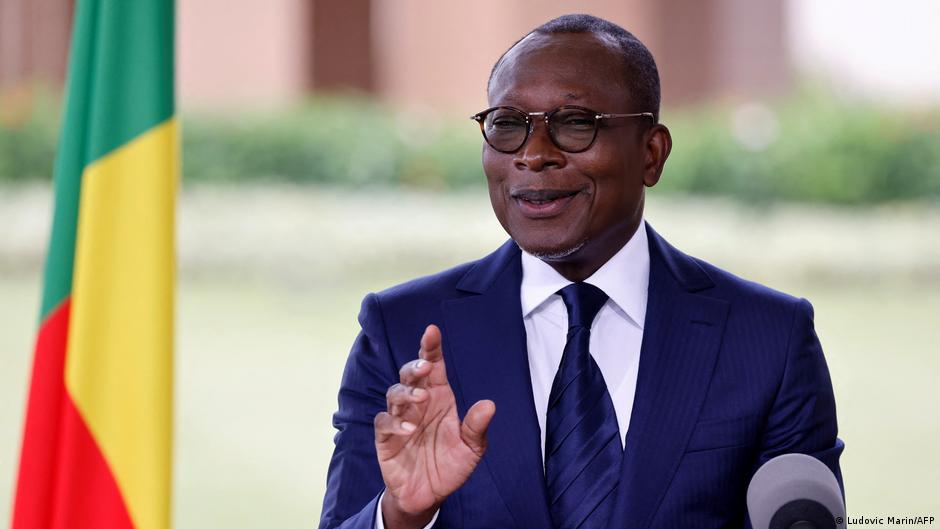
Talon described the coup late Sunday as a “senseless adventure,” and vowed to punish mutineers and ensure the safety of hostages. He didn’t disclose their identities, and it wasn’t clear how many were held, but some are believed to be senior military officers.
Early on Sunday morning, “violent clashes” had broken out between army mutineers and the Republican Guard around the residence of President Patrice Talon in Cotonou, the economic capital of Benin.
The rebels reportedly got close enough for Talon to witness the fighting at first hand, according to an official cabinet account which said that the fatalities included the wife of the president’s military chief-of-staff, General Bertin Bada, who was himself fatally wounded in a separate, earlier assault.
Meanwhile, army rebels calling themselves the Military Committee for Refoundation (Comité militaire pour la refondation), or CMR, led by Lieutenant Colonel Tigri stormed the national television station and appeared in a broadcast announcing the removal of President Talon, the dissolution of the government and the suspension of state institutions.
Why did Nigeria and ECOWAS intervene?
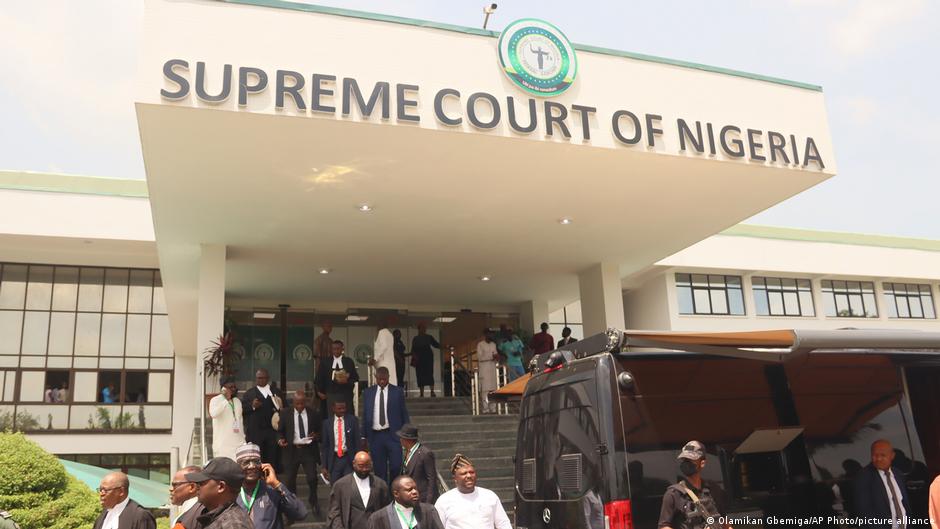
But the coup was put down by Beninese troops with the help of air and ground forces from neighboring Nigeria, deployed as part of an Economic Community of West African States (ECOWAS) operation which also included forces from Ghana, Ivory Coast and Sierra Leone.
Nigeria and the ECOWAS regional bloc hadn’t intervened in a member state since 2017, when it sent troops to Gambia to force then President Yahya Jammeh to vacate power following his election loss.
Recent West African coups in Mali, Burkina Faso, Chad, Guinea and Gabon didn’t lead to interventions, prompting analysts to criticize ECOWAS for a lack of consistency.
“The coup in Benin is one too many,” Oluwole Ojewale, a senior security researcher at Dakar-based Institute for Security Studies, told the Associated Press (AP). “Nigeria cannot afford to be encircled by hostile governments.”
Edited by: Dmytro Hubenko