India’s External Affairs Minister, Dr S. Jaishankar, on Wednesday adopted a strong stance in response to US President Donald Trump’s imposition of a 50% tariff on Indian goods, emphasising that the shifting global order is compelling nations to rethink their strategies and partnerships.
The Donald Trump administration has imposed a steep 50% tariff on Indian goods, which also includes a punitive 25% duty for India purchasing Russian oil.
Speaking after high-level discussions with German Deputy Foreign Minister Johann Wadephul in New Delhi, Jaishankar said that the current geopolitical and economic turbulence makes closer collaboration between India, Germany and the European Union (EU) essential.
“The changes we see in the world today do influence our policies and do influence the manner in which we approach other countries,” Jaishankar remarked.
“We are witnessing significant and far-reaching changes on the global strategic landscape. We’re also seeing a lot of volatility on the global economic landscape and I think together they make a very powerful case for India and the European Union and India and Germany to work much more closely with each other.”
Why are India and Germany pushing for deeper ties?
During his meeting with Wadephul, Jaishankar highlighted that the India-Germany relationship has vast potential for rapid growth, especially amid mounting trade tensions with Washington and Brussels.
“This is a relationship where there are considerable possibilities for fairly rapid growth… Today, our conversation was mostly devoted to the bilateral part,” he said.
“The minister was kind enough to assure me that Germany would also put its full weight behind the FTA negotiations with the European Union. So the bottom line answer is yes. There are big changes underway in the world. Those changes make a very compelling case for a deeper, stronger, wider India-Germany relationship.”
Wadephul, currently on a two-day visit to India, had earlier travelled to Bengaluru to engage with Indian tech and innovation leaders before arriving in the capital for formal talks.
What is the status of the India-EU free trade deal?
India and the EU are negotiating a free trade agreement (FTA) to enhance their $190 billion annual trade in goods. The talks, currently underway in Brussels, have been slowed by disagreements over key issues such as import taxes, environmental rules and labour standards.
The EU is pressing India to cut duties on cars and dairy products while demanding stricter climate and labour commitments. Conversely, India is determined to protect its farmers, avoid binding green regulations, and retain control over legal dispute mechanisms.
“We count on your support to deepen our relationship with the European Union and expedite the FTA negotiation,” Jaishankar told Wadephul at the start of their meeting.
India’s Commerce Minister Piyush Goyal confirmed on Tuesday that technical-level discussions are ongoing, with both sides aiming to finalise the pact by year-end.
How is India responding to US tariffs and Russian oil sanctions?
The latest US tariffs have added fresh strain to India’s trade landscape. In addition to the 50% duty imposed by President Trump, Washington DC has also slapped a 25% punitive tariff on certain Indian exports over New Delhi’s purchase of discounted Russian oil.
India has strongly criticised both the US and the EU, accusing them of hypocrisy for penalising India while continuing their own extensive trade with Moscow amid the ongoing war in Ukraine.
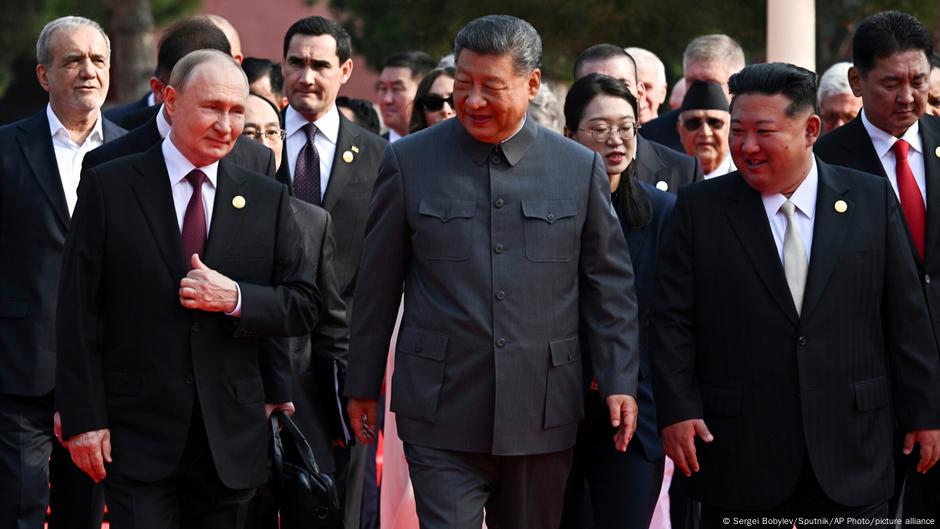
New Delhi’s stance comes at a time of intense global power realignments, showcased at the recent Shanghai Cooperation Organisation (SCO) Summit in China. The summit was attended by Prime Minister Narendra Modi, Russian President Vladimir Putin, and other regional leaders.
In a dramatic display of solidarity, Putin, Chinese President Xi Jinping, and North Korean leader Kim Jong Un appeared together at China’s Victory Day parade, where Beijing vowed never to be “bullied again”.