As an eventful 2025 draws to a close and Germany takes stock, our columnist Brian Melican casts his gaze ahead to the new year: what can we expect in 2026? More of the same uncertainty and crisis – or worse?
It’s just been one of those years, hasn’t it? Bad news for Germany and its allies on every front – from the literal front in Ukraine through to the economy (stagnant), our welfare state (unaffordable) and our political culture (scarred). Yes, 2025 has been so grindingly unpleasant that it already felt like it should have been over back in August. Now, finally, it very nearly is.
Will 2026 be any better? Short answer: I don’t know, but I doubt it.
And it depends on your attitude: would you consider all-out nuclear war ‘worse’ than things as they are now, or see it more as a welcome change of pace…? So let me, instead, offer six specific predictions about the coming 12 months – in descending order of certainty.
1. The regional elections will be a disaster for established parties
PROBABILITY = This will happen. (100%)
The coming year will see four of Germany’s 16 federal states re-elect their legislative chambers, starting with Baden-Württemberg on March 8th.
Here, the bloodletting will commence, as the Greens – who currently lead a coalition with the Christian Democrats (CDU) – will drop behind both their erstwhile partners and the far-right Alternative for Germany (AfD). The far-right outfit will also come second in Rhineland-Palatinate a fortnight later, cementing its role as the main opposition party. The losers here: SPD, Greens and FDP.
If that weren’t bad enough, things will get even worse in September, when two states in the former East elect their Landtage: Saxony-Anhalt on the 6th and Mecklenburg-Western Pomerania on the 20th.
The AfD will win the largest share of the vote in both, knocking the SPD off its perch in MeckPom, and pushing past the 40 percent mark in Saxony-Anhalt.
This latter figure will provoke a political crisis of the first order in Magdeburg, where the second-placed CDU will have to try and cobble together a government with the support of literally every other party, including far-left outfits – an almost impossible undertaking.
And if the CDU’s Sven Schulze can’t get himself elected as premier, we face the unedifying possibility of the AfD leading a state administration for the first time…
READ ALSO: Elections and reforms – What can be expected in German politics in 2026?
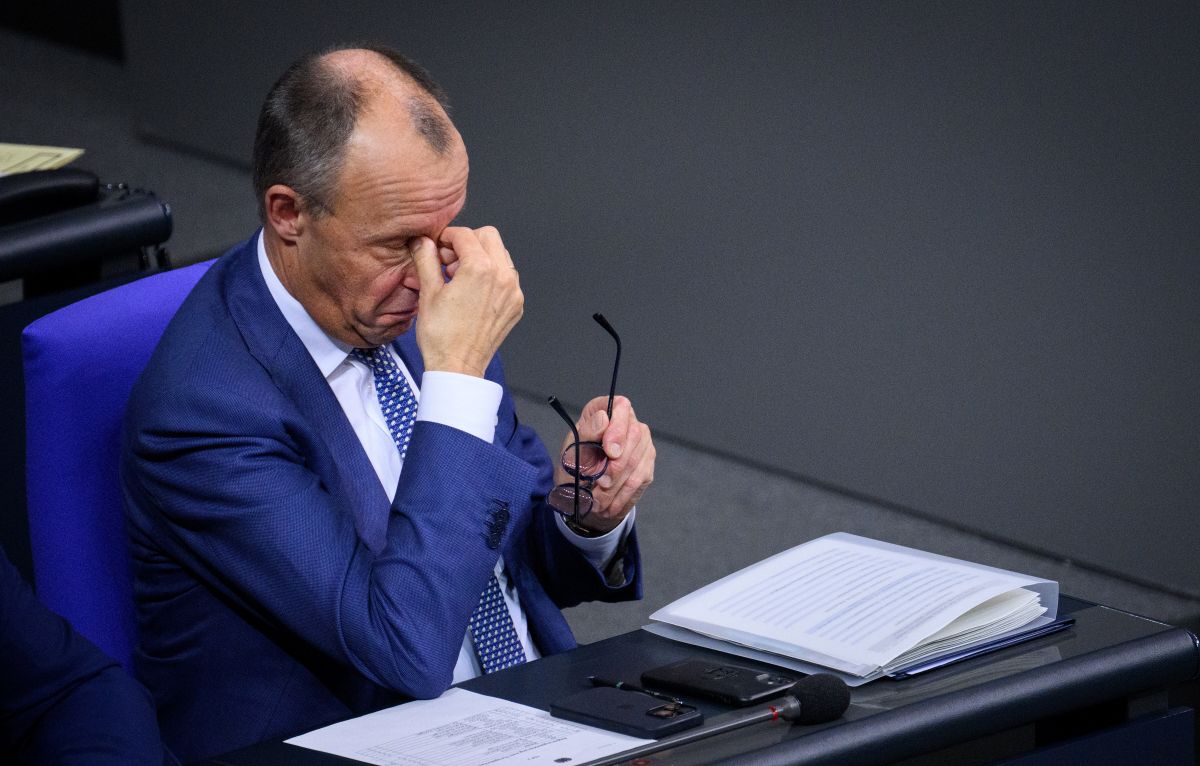
Federal Chancellor Friedrich Merz (CDU) seen in the German Bundestag during its last session of 2025. The coming year can be expected to bring further political challenges and drama. Photo: picture alliance/dpa | Bernd von Jutrczenka
2. This crisis will lead to another near-death experience for the coalition
PROBABILITY = This will happen unless everyone keeps their cool. (So: 95%)
Looking on in horror as Schulze is forced to swallow any remaining sense of CDU pride and parley with the Left Party (Die Linke), and whatever the BSW has decided to call itself that week, his colleagues in Berlin will go to pieces.
While Friedrich Merz pretends the matter doesn’t concern him and Norbert Röttgen urges calm, someone like Jens Spahn, Torsten Frei, or Alexander Dobrindt will lose their sang froid and start to publicly argue that, since the CDU/CSU can’t beat the AfD, they need to join forces with them. Now. Before it’s too late and they really get hammered at the Bundestag ballot box in 2029…
In response, the SPD will say “We knew it all along!” and look for the first possible piece of legislation they can threaten to torpedo, unless Merz fires whoever the miscreant is.
The wrangling will last all of next autumn, leaving whatever remains of the coalition’s programme by then in tatters and the country’s nerves shredded. The government won’t fail, though, because not enough CDU/CSU people would be comfortable switching to minority government with AfD support – and the SPD won’t want to force that outcome.
So since there is no other option for government, the coalition will, zombie-like, stumble on, decaying chunks of flesh falling off (Jens Spahn will resign) as it moans ‘Brains…’
3. This zombie administration will continue to feast on the young
PROBABILITY = Unavoidable without real economic growth and other pleasant surprises. (So that’s a good 90%, then)
Politically, anyone under 40 in Germany is facing the equivalent of a zombie apocalypse. Like in an arcade shoot-‘em up, the undead keep coming at them, desperate to suck them dry.
The recent pensions legislation, for instance, means that, by next year’s budget, serious cuts will be being made to basic services and investment plans put on hold to pay retirees. Meanwhile, the first 18-year-olds will be receiving their call-ups for a compulsory medical examination as the army starts to keep records of each cohort born after 2008 as a prelude to conscription.
Yet even while being drafted, the young will be shafted: expect one of the major news topics next year to be failures in the new system, which will be poorly organised and lead to most getting off Scot free while others are repeatedly pursued.
Why I am so sure of this? Put simply, the Bundeswehr is starting from square one, trying to rebuild structures comprehensively dismantled in 2011. Even an efficient organisation would have trouble doing this well on a tight timescale… Then again, maybe the army will rediscover its military precision and prove me wrong?
READ ALSO: Why Germany’s rapidly aging population affects everyone in the country
4. The German army will be involved in limited military combat in Europe
PROBABILITY = You feelin’ lucky, punk? (Vlad is: 75%)
Even without tearing their hair out over how to reintroduce conscription, our notoriously inefficient and long-underfunded armed forces will have their hands full in 2026. The Bundeswehr is currently helping to reinforce NATO’s eastern flank by setting up a brigade in Lithuania and scrambling to re-establish an air defence command (yes, that’s right: we got rid of that back in the 2010s, too).
But why would Vladimir Putin do the gentlemanly thing and wait until we’ve finished before coming at us?

An elderly man looks out of his broken window when an apartment building is hit by a Russian drone in an airstrike. Photo: picture alliance/dpa/AP | Efrem Lukatsky
No, I reckon he’ll try and get in a sucker-punch early while we’re taking off our jacket and rolling up our sleeves. So expect some form of sabotage or covert operation in Lithuania, or a massive drone incursion over German airspace – possibly launched from a shadow-fleet tanker in the Baltic, possibly in the run-up to the election in vulnerable coastal state MeckPom.
If that happens, for the first time in its history, the Bundeswehr will find itself firing live rounds at enemy forces on NATO territory…
5. There will actually be good news from Deutsche Bahn for a change
PROBABILITY = Percentage of intercity trains currently arriving on time (So that’s, er, *checks notes*, 61%)
Looking for at least one potentially positive story in 2026? Well, this may sound crazy, but keep your eyes on Deutsche Bahn!
For a start, things surely can’t get any worse for our embattled national rail operator, so gambler’s logic dictates that it must be up for a win soon.
Less facetiously: within weeks of arriving at the top, DB’s new boss has shown she means business by cleaning out the company’s bloated management. And while the problems are too big for one woman to fix (especially in the space of months), she is certainly putting DB back on the right track. Or, well, back on the rails.
So those in the know expect passenger train operations to be stabilised next year – and, potentially, for the ginormous financial losses of recent years to be stemmed. It won’t be the land of milk, punctuality and cheap tickets just yet, but it will be better than the status quo. Unless, of course, something happens – something untoward (see above) or unexpected (see below).
LISTED: The big changes for travel in Germany in 2026
6. There will be an astonishing event no-one has predicted
PROBABLITY = Everything that happens has been predicted somewhere by someone. (Source: internet. 0%)
“Events, dear boy, events”, as Harold Macmillan put it.
And 2026 will certainly surprise us with at least one out-of-left-field event. Which, although most of us weren’t expecting it, will prove somebody right somewhere. Covid19, for instance, was a shock for almost everyone – except virologists, who’d been predicting a pandemic caused by an airborne respiratory disease out of East Asia for years.
So, if you have a specific area of expertise, why not put your prediction for 2026 in the comments box? That way, you’ll at least have proof that you called it right…