
From changes to asylum rules and new Blue Card requirements to the introduction of a new ‘Work and Stay Agency’ aimed at helping skilled workers to come live in Germany, here are the immigration changes you can expect in 2026.
It’s been a busy few years for shake-ups to immigration and citizenship rules in Germany as the country tries to deal with the worker shortage. At the same time, attitudes to migration have toughened.
With that in mind, 2026 is a mixed bag for changes and discussions regarding migration in the coming months. Here’s what you can expect.
Work and Stay Agency
One of the bigger changes planned for next year is the start of the Work and Stay Agency, which should streamline immigration for skilled workers.
This initiative is aimed at helping non-EU workers settle in Germany and providing clear and quick information. It will act as a “One-Stop-Government”, connecting visa offices the Federal Employment Agency and immigration offices.
It comes as German authorities try to encourage immigration to tackle the labour shortage, which is intensifying as the baby boomer generation retires, leaving a hole in the social security system.

A skilled worker from abroad works at an industrial plant in Baden-Württemberg. Photo: picture alliance / Christoph Schmidt/dpa | Christoph Schmidt
“With the digital Work and Stay Agency, we are breaking down the bureaucratic barriers that have previously made it difficult to access the German labour market,” Labour Minister Bärbel Bas (SPD) said in October.
A firm plan and schedule for this project is set to be put forward by government departments by March 1st, 2026.
“Step-by-step implementation will take place in the coming years,” the government added.
READ ALSO: Why Germany struggles to attract the foreign workers it needs
Asylum rules reform
The EU is reforming asylum rules in 2026, which Germany, as a member country, has agreed to implement.
Among the planned changes are opening of centres outside the EU’s borders to which migrants whose asylum applications have been rejected would be sent: so-called “return hubs”.
The EU also envisages harsher penalties for migrants who refuse to leave European territory, including through longer periods of detention and returning migrants to countries that are not their countries of origin, but which Europe considers “safe”.
Germany’s Interior Minister Alexander Dobrindt (CSU) welcomed the EU decision but said he wants to see even tougher rules in place.
Activists have denounced the measures, saying they violate migrants’ human rights and risk pushing them into danger.
The reform is scheduled to take effect in summer 2026.
Chancellor Friedrich Merz has that the new EU measures could allow Germany to end its own border controls, that were first introduced in September 2024.
New EU Blue Card salary requirements
Salary requirements to get an EU Blue Card in Germany will rise at the start of the year.
You’ll need to earn a gross annual salary (before tax) of at least €50,700 to qualify for an EU Blue Card in 2026 (up from €48,300 in 2025).
Or, if you are employed in a ‘bottleneck profession’ – such as IT, STEM, construction or education, among others – then you’ll need a salary of €45,934.20 or more (up from €43,759.80 in 2025).
IT workers with professional experience will also need a salary of €45,934.20.
These figures were provisional at the time of publication but are not expected to change.
READ ALSO: The salary you need in Germany in 2026 to get an EU Blue Card
Paternity checks for multi-national couples
In a purported effort to crack down on paternity fraud, the government has introduced a draft law that would require immigration authorities to verify a paternity in cases where one parent does not have German citizenship or a secure residence permit.
However, verification would not be required if the couple can demonstrate they have lived together for at least 18 months, if they marry after the birth of the child, or if the man is the biological father of another child with the same woman.
If enacted, the law would also give authorities the power to retroactively revoke granted approvals in cases where false information had been provided. Additionally the law would introduce new criminal penalties for those found guilty of fraudulent paternity recognition.
READ ALSO: Will a new clampdown on paternity fraud affect international families in Germany?
So far the draft law has been approved by the Federal Cabinet, so next it would be need to be passed by Germany’s two parliamentary bodies, the Bundestag and Bundesrat. The Bundestag is expected to debate the bill in January 2026.
Tightening of citizenship laws?
Foreigners in Germany were elated in 2024 when citizenship rules were overhauled, resulting in dual citizenship for all and reduced residency requirements.
Yet many centre-right and far-right politicians – including Chancellor Merz – have been pushing to reverse the laws since then. And they got their way, at least partially, in late 2025 when fast track citizenship, which allowed ‘exceptionally integrated’ foreign residents to become German after three years, was axed.
So is the matter laid to rest? Of course not.
The Local reported recently that the CDU/CSU in particular is pushing for more changes.
A spokesperson for the CDU told us: “Our aim is to examine expanding the grounds for loss of German citizenship for persons with dual citizenship who have committed multiple serious crimes and thus pose a threat to security in our country.”
However, Social Democrat Bundestag member Sonja Eichwede said that “no further changes are planned” to the nationality law.
READ ALSO: ‘Nonsense’ – Why scrapping dual citizenship would counter the German government’s goals
Meanwhile, a concrete measure in the pipeline is a 10-year citizenship ban for people who try to submit fake German language or integration tests in order to gain nationality.
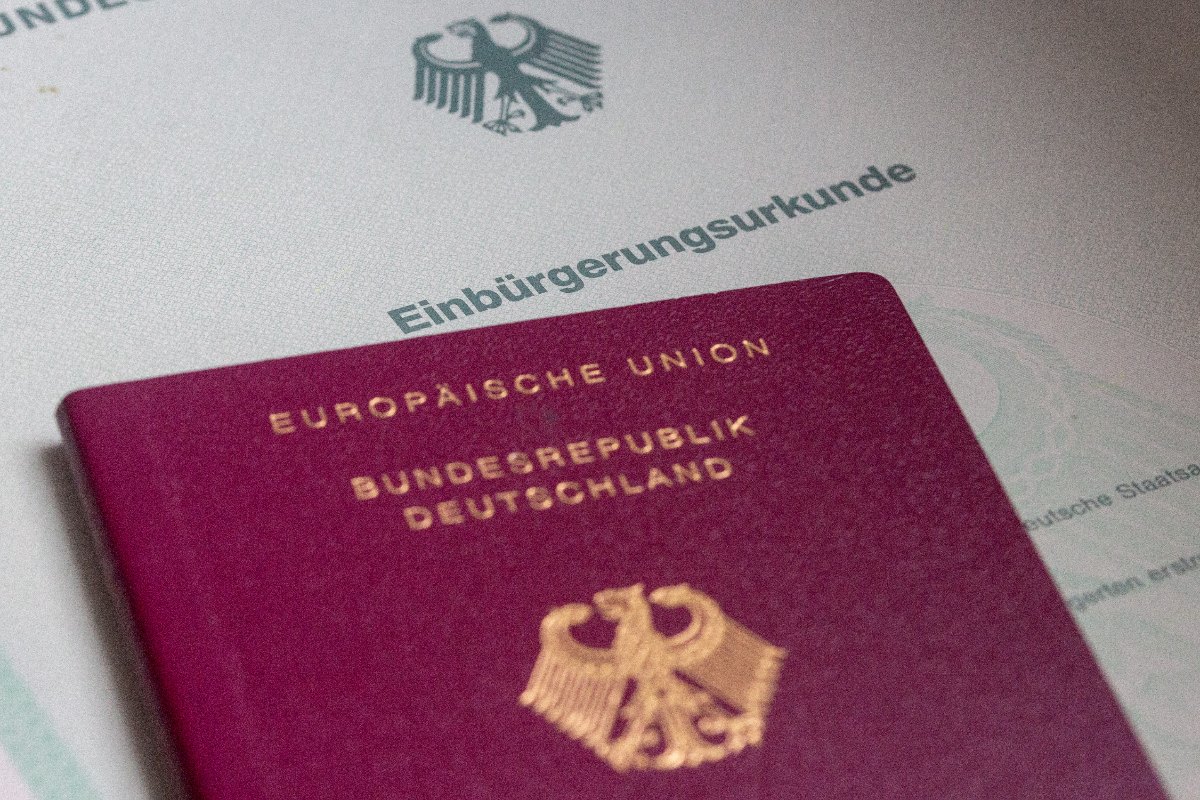
A German citizenship certificate and passport. Photo: picture alliance/dpa | Fernando Gutierrez-Juarez
Tougher rules for travel to UK
This isn’t a German rule, but it does affect some foreigners living in Germany. The UK introduced a required visa waiver, called the Electronic Travel Authorisation (ETA), for visitors in April 2025.
The UK government recently warned that travellers will be refused entry from February 2026 if they do not have the correct document.
The ETA is a visa waiver that must be applied for online in advance of your trip. It costs £16 and lasts for two years.
UK nationals are exempt, as is anyone travelling on an Irish passport, but all other nationalities now need the ETA.
READ ALSO: Do I need an ETA visa for my German spouse or children?
Hardening attitudes towards immigration: what will it bring?
It’s no secret that Germany is taking a tougher stance against immigration, as are many nations across Europe and the world.
Recent policy changes such as the end of family reunification for refugees, abolishing fast-track citizenship and reforming the asylum system all point to the political shift and increasing polarisation.
Rhetoric is also intensifying, with migration being increasingly framed as a burden on society.
READ ALSO: Majority of Germans believe the country has seen too much immigration
With support for the anti-immigration and far-right Alternative for Germany (AfD) still rising (currently polling at around 26 percent), it seems German politicians are hardening their position in an attempt to claim back voters.
Yet at the same Germany needs immigrants as labour shortages deepen and the population gets older. So how will this play out in 2026?
It’s not looking great. Expect more mixed messages that will push immigrants away from a country that needs them.
READ ALSO: Yes, Germany’s slide towards hard-line immigration policies will affect you