Foreign residents in Germany are often surprised to discover that they have to pay church tax, even when they are not particularly religious. We explain what it is and whether you can avoid paying it.
Registering your address – known as the Anmeldung – is one of the most important bureaucratic steps in Germany. Whether you’ve just arrived in the country or simply moved to a new flat, finally completing the process often comes with a sense of relief.
For some foreigners, however, it can also come with an unexpected cost: the church tax – Kirchensteuer.
That’s because, depending on how you indicate your religious affiliation on the registration form, you may automatically become liable for this fee.
CHECKLIST: The most important paperwork you need to settle in Germany
That can be a bit of a shock for international residents, who might not realise the implications of informing the authorities casually that they belong to a religion.
For instance, some people may feel culturally aligned to a religion, but don’t consider themselves an active member in the community.
And, to complicate matters further, some people who indicate that they are not religious may still see the tax applied, or receive a letter asking for more information, if authorities believe the resident grew up in a religion.
Advertisement
What is the tax for?
Despite declining membership at churches, Germany has traditionally been a religious country.
And church tax is serious stuff. Some religious communities in Germany are permitted to charge their members a fee, and use the money to pay their staff and finance any other work.
It is collected by the Finanzamt (tax office) and passed onto the church (bar a service fee).
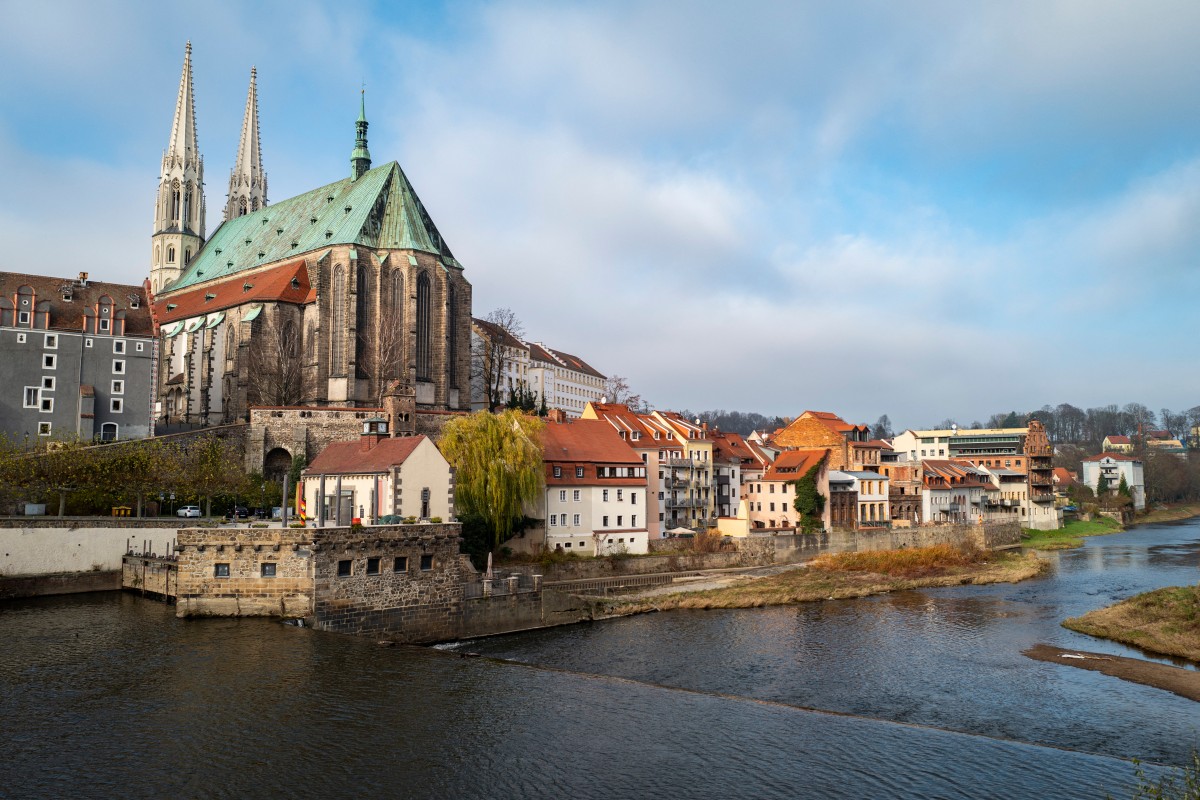
View of the Saints Peter and Paul Church (Peterskirche) on the banks of the river Neisse in the historical centre of Görlitz, in 2020. Photo: John Macdougall / AFP
Who has to pay the tax?
The tax is collected from members of certain religious communities that are officially recognised by the state. This includes the Catholic Church, the Protestant Church (known as the Evangelische Kirche in Deutschland or EKD) and some Jewish communities.
If you declare your affiliation with one of these groups when registering your address, the tax office will automatically deduct the contribution from your payslip each month.
The following state-recognised religious communities are allowed to levy a church tax:
-
Protestant regional churches (part of the Evangelical Church in Germany, EKD)
-
Catholic Church
-
Old Catholic Church
-
Jewish religious communities
-
Israelite religious communities
-
Free religious communities (in Baden, Mainz, Offenbach and Rhineland-Palatinate)
-
French Church in Berlin (Huguenot congregation)
-
Mennonite community in Hamburg-Altona
-
Unitarian religious community of Free Protestants in Rhineland-Palatinate
Some recognised religious communities choose not to levy a tax. They include the Orthodox churches, Evangelical Free Church communities, the Salvation Army and Jehovah’s Witnesses.
Members of Muslim and Buddhist religious groups do not pay church tax because their organisations are not recognised as public-law corporations.
Advertisement
How much is it?
The tax amounts to eight percent of your income tax in Bavaria and Baden-Württemberg, and nine percent in all other states.
For example, let’s say you are unmarried with no kids, and earn €50,000 per year before tax (gross) at your job.
Roughly speaking, your income tax liability would be around €9,500 to €10,000 annually although this varies depending on health insurance, deductions and your tax class.
You would then pay about €850 to €900 per year if the rate where you live is nine percent, or about €760 to €800 per year in Bavaria or Baden-Württemberg.
It works out to around €65 to €75 per month. This is in addition to your other taxes and contributions.
Can I get out of paying church tax?
If you don’t belong to a recognised church – or you choose to register as having no religion – you won’t be charged. Remember to specify that you don’t pay any church tax in any tax returns you fill in, too.
Some foreigners, however, accidentally end up paying because they list they are religious on the form without realising the financial implications.
Another thing to watch out for: It’s not unheard of that the church tax is applied seemingly automatically to people who have been baptised in their home country or are believed to have been, for example, even if that person does not consider themselves religious.
READ ALSO: Crossed wires – why church tax is causing extra stress for expat tax payers
Advertisement
The thing to keep in mind is that unless you have formally left your faith in Germany, you are still considered religious.
To do that, you can submit an official declaration at your local Standesamt or Amtsgericht and opt out.
That can be an emotional decision for people, even for those who have lapsed in their faith. But for some, it is a question of whether they can afford the financial hit.
What else should I consider?
If you opt out of paying church tax, it could be harder to hold a marriage celebration at a church (if that’s your wish).
The thing to keep in mind is: if you want to be actively involved in a church community in Germany, you’ll generally have to pay the tax.
READ ALSO: The rules foreigners should know about German church weddings
Do you pay church tax in Germany? Do you think it’s a good idea? Share your thoughts in the comments below or email us at news@thelocal.de